



Not every beautiful scent is artistic, and not every artistic scent is “beautiful” at first. What brings a perfume closer to art is that it says something rather than simply pleasing. How can we tell?
It is born from an idea
An artistic fragrance starts with a concept, a memory or a feeling. At Puzzle, Fibonacci comes from the golden ratio, Purgatory from the space between two worlds, Rayiha from the past touching the present. The notes are chosen to tell that idea, not to follow trends.
It has a journey
An artistic scent tells a story on the skin: an opening, a development and an ending. The path described for Gece is a good example: first a spicy spark, then a floral passage, finally a lasting trace that descends into the depths of the soul. Time is part of the fragrance.
It does not fit the moulds
Art often pushes against categories. Puzzle’s eight fragrances are genderless; they put forward what they say rather than who they are for.
It is part of a whole
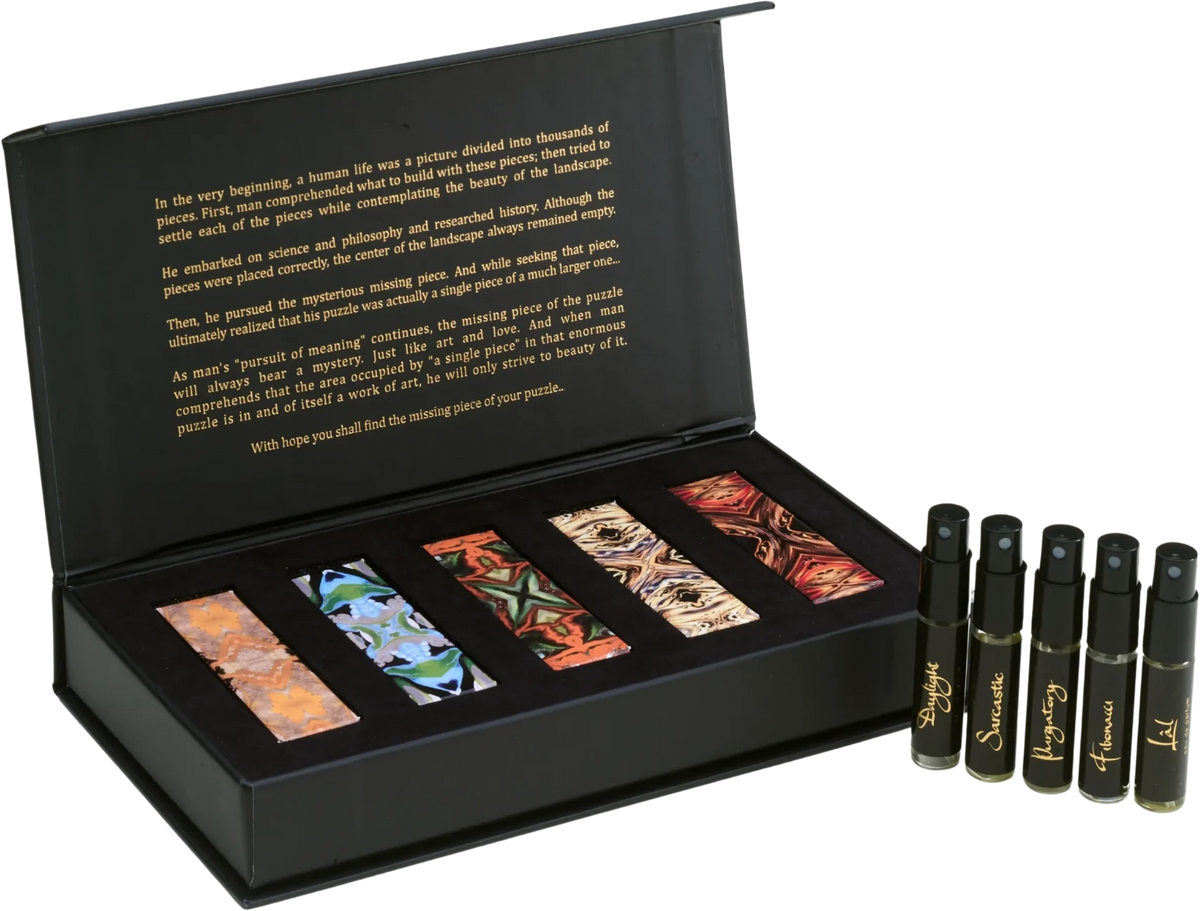
In an artistic perfume the scent does not stand alone. Name, bottle, lettering and box speak the same language. At Puzzle, the bottle carries patterns evolved from the artist’s paintings and the names are hand-lettered in calligraphy. Scent and visual world complete each other.
It leaves a trace
An artwork stays with you after the encounter ends. A fragrance leaves a trace in memory too; as the artist says, of all the senses smell affects memory most. Puzzle takes this a step further: when the fragrance is gone, the bottle stays on your shelf as an art object.
“For us, scent is not just a pleasant impression; it is a journey, an inner remembering, an awakening that touches your soul.”
Read next: Perfume as art · The artistic world of independent perfumery


