


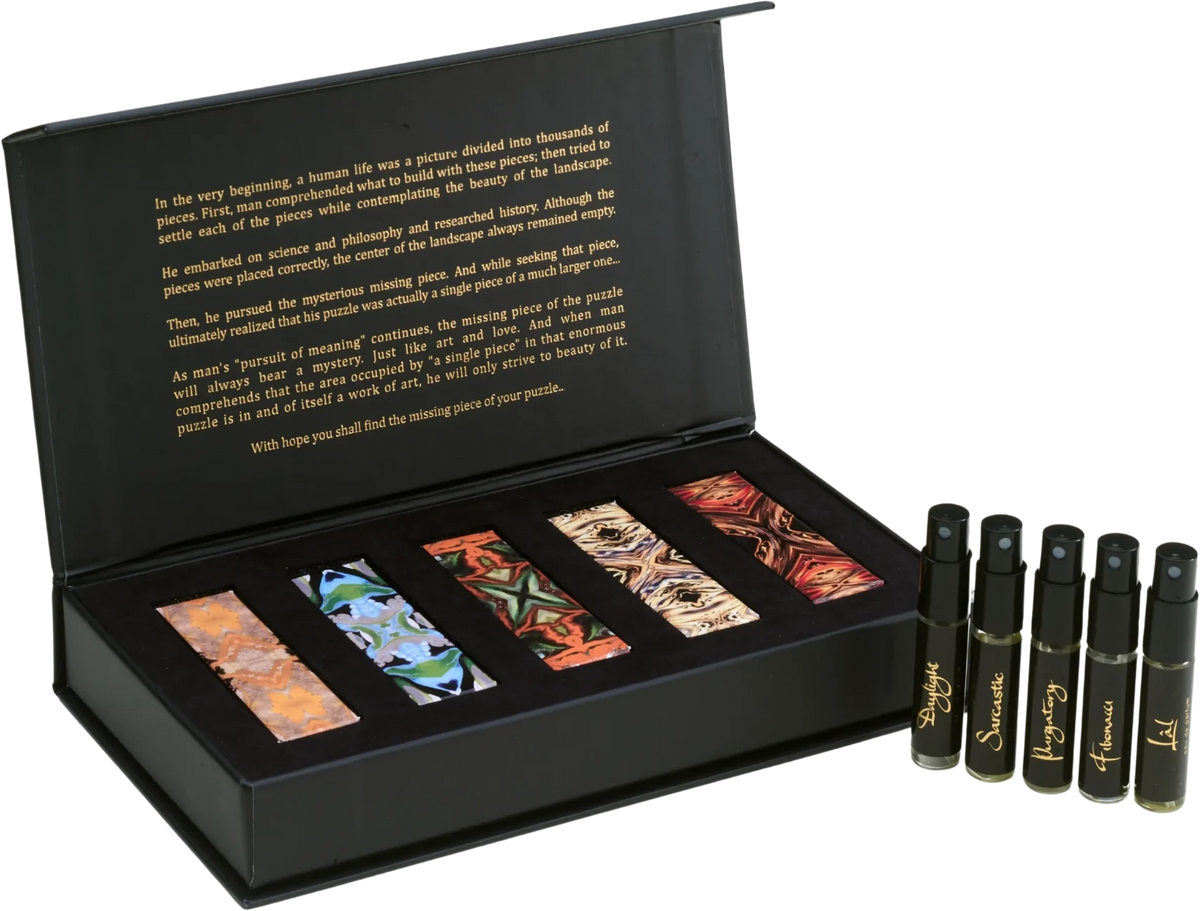
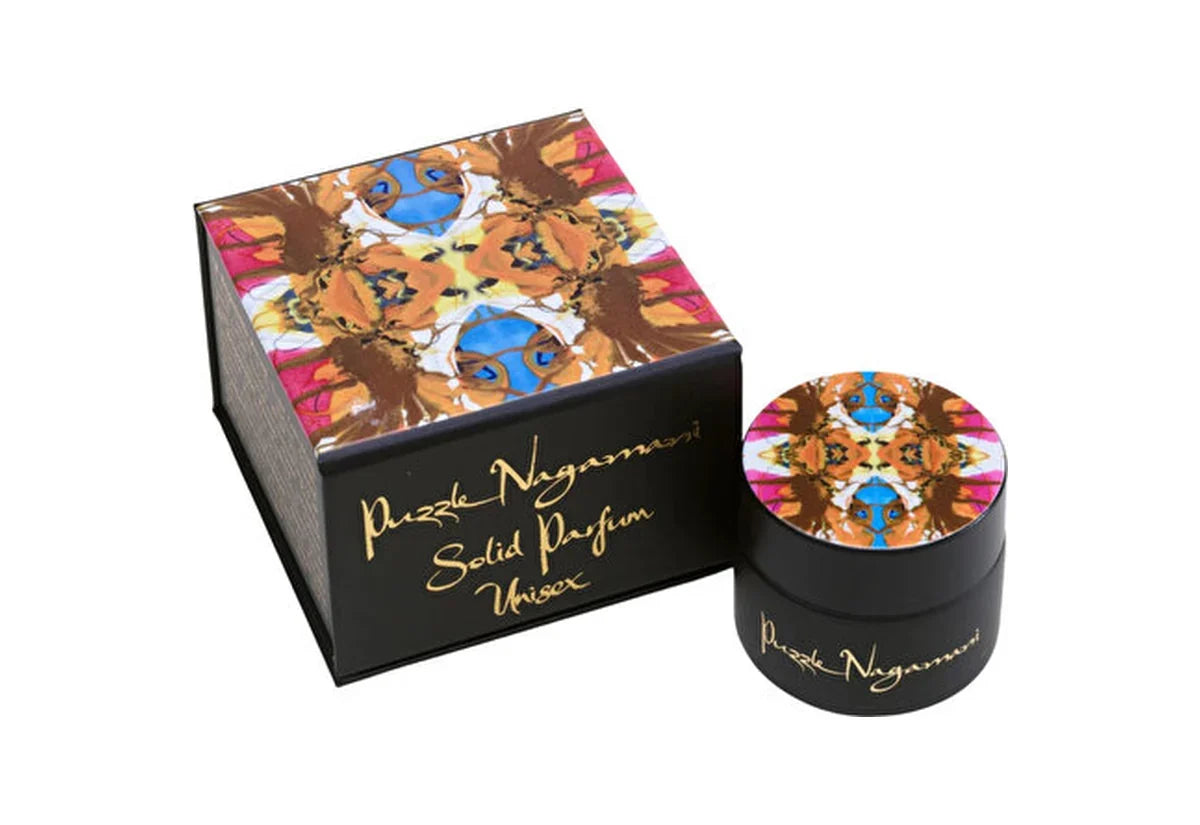
The oldest source of perfume is nature. The first fragrances came from resins, flowers, spices and woods. Today perfumery works with a far wider palette, yet the language of scent is still the language of nature. In Tahir Cengiz Yatağan’s words, Puzzle fragrances were born by “shaping the miracles Mother Nature offers us with art and taste.”
Flowers
Rose, jasmine, violet, lily of the valley, lilac, tuberose and orange blossom often sit at the heart of a fragrance and give it emotional depth. In Gece, lilac, lily of the valley and rose express “the balance of darkness and light”; in Rayiha, lily of the valley and tuberose carry an emotional elegance.
Spices
Clove, nutmeg, cinnamon, saffron and pepper bring warmth and spark. Lal opens with clove and nutmeg, Fibonacci with bergamot, clove, cinnamon, nutmeg and saffron, while Gece’s pepper creates a mystical opening.
Citrus
Lemon, bergamot and orange are the first and brightest moment of a fragrance. Daylight’s lemon tells of the light of a new day; Nagamani’s bergamot and lemon, of a purifying beginning.
Woods, roots and resins
Sandalwood, cedar, vetiver, guaiac wood, agarwood (oud), orris root, incense and amber form the foundation, giving a fragrance depth and staying power. Purgatory’s agarwood and honey, Sarcastic’s vetiver and cedar and Nagamani’s guaiac wood carry that earthy feeling.
The artist’s nature
Nature is the source not only of Puzzle’s fragrances but of the artist’s paintings. Yatağan’s surfaces recall volcanic landforms, marble veins, tree trunks and the delicacy of leaves, the way nature repeats itself while nothing is ever alike. The patterns on the bottles evolve from these paintings, so nature lives both inside the bottle and on it.
Read next: A guide to fragrance notes · The collection


